"Woman in a Striped Dress"
Oil on Canvas, 65.7 x 58.7 cm
Édouard Vuillard, 1895
Faithful readers know how much I love the paintings of the Nabis. The Nabis were a loose confederation of painters working in France (especially Paris) in the late 1800's, who led the way forward out of Impressionism, toward modernism. The Nabis are not as well known as some of their predecessors (or successors, for that matter), but that may be changing. One sign of change is a current exhibit, "Private Lives: Home and Family in the Art of the Nabis". The exhibit features four chief members of the Nabis: Édouard Vuillard, Felix Vallotton, Maurice Denis, and Pierre Bonnard.
"The Red Room, Etreat"
Felix Vallotton, 1899
The Nabis are sometimes called "Intimistes", because their work is based on intimate scenes of daily life, often set inside cocoon-like rooms. Hence the term "intimate". It is lost on nobody that this exhibit coincides with a period of lockdown from the COVID pandemic--just when we have spent months confined in close quarters in our homes. Very appropriate timing for a show that explores the life contained within the walls of home.
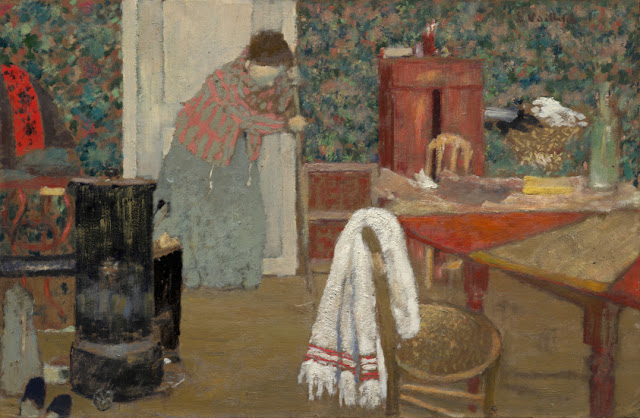
"Woman Sweeping"
Édouard Vuillard
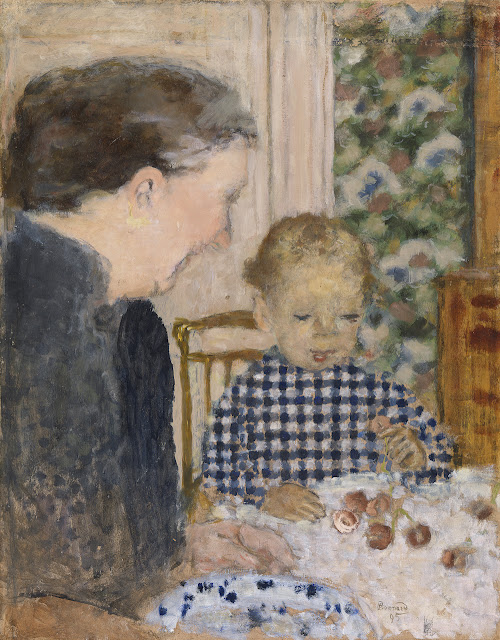
A common thread through the Nabis was their ability to "draw emotion from the most modest acts of life", as Bonnard said. Styles may differ, but the artists all portray everyday scenes around home--people at the dinner table, or patting their pets, or playing the piano. Routine tasks of housekeeping, or feeding and bathing children, occupy a central role.
"The Lie"
Felix Vallotton, 1898
Some of these scenes are peaceful and serene. Others have a certain tension that hints at conflict. In fact, to illustrate the difference between these two emotions, the first room of the exhibit is titled "The Intimate Interior", and the next room is titled "The Troubled Interior". As you might guess, the first room is filled with paintings that convey innocence, warmth and tenderness. The next room holds works that convey drama, secrets, even betrayal.
"Washing the Baby"
Maurice Denis, 1899
"Boy Eating Cherries"
Pierre Bonnard, 1895
Several writers have commented on the prominent role of wallpaper in these paintings. I see this especially in Vuillard. Some of his figures virtually disappear into the walls, as the patterns of their clothing blend with the patterns of the wallpaper. It makes you wonder: Are the figures emerging? or fading away?
"Mother and Sister of the Artist
Édouard Vuillard
Speaking of interior decor, I was fascinated by another sign that the Nabis still influence contemporary tastes. The costume designer for the Netflix series "The Crown" says that her approach to the outfits for the Royal Family is inspired by the paintings of Vuillard. She likes the way that Vuillard emphasized the patterns of clothing and decor. She also notes that the close, confined quarters of Vuillard's paintings are consistent with the Royals' lives, "locked in their palaces." The image below shows a scene from "The Crown" that she says is "a Vuillard painting, if ever there was one."
Scene from Netflix series "The Crown"
The Nabis exhibit completed its run at the Cleveland Museum this fall, and is open at the Portland (Oregon) Museum of Art through January 23, 2022. Since I won't get to see the show, I might just splurge and buy the catalog, which gets great reviews. There is also a good UTube video chat by the Portland curator of the exhibit, discussing some key works and curatorial themes of the show. Enjoy!