Showing posts with label Van Gogh. Show all posts

Thursday, February 18, 2016

Capital "T" Truths


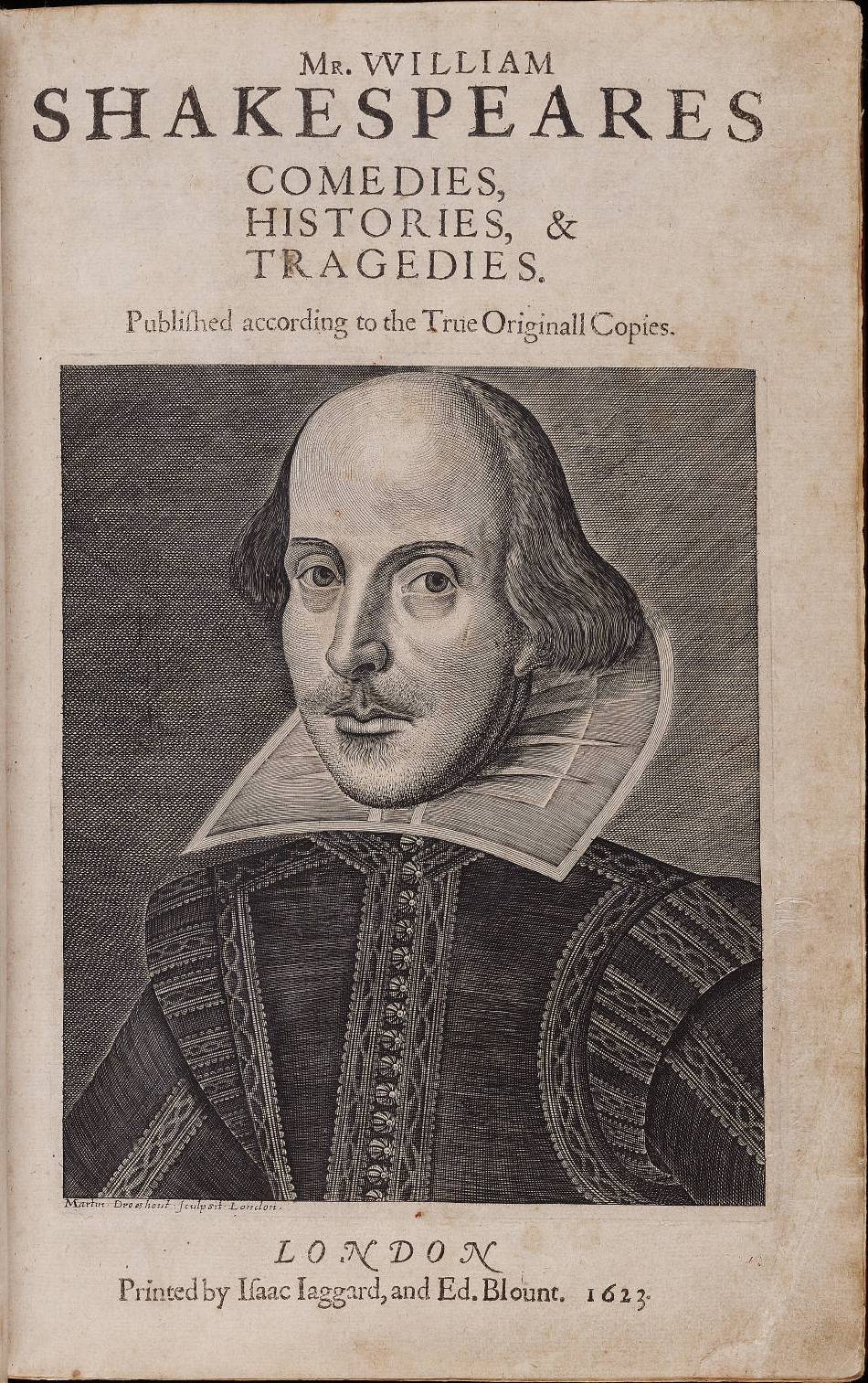
I am taking a Shakespeare course this winter, and have learned that the Great Bard himself occasionally misstated a few historical facts. But as the wise instructor of my class says, those small factual misstatements did not prevent Shakespeare from capturing the true reality of the human experience, in all of its glory. In other words, Shakespeare might not have gotten all of the "small t" truths right, but he definitely got the "Capital T" Truths right!


"Wheatfield with Cypresses"
Vincent van Gogh
I believe that all art involves the search for "Capital T Truths". When painting, I sometimes recall a quote attributed to Tolstoy: "Facts stand in the way of Truth". Put differently, the slavish painting of every telephone pole, every fence post, every leaf on every tree, does not

Wednesday, July 22, 2015

Patchwork Fields


I have just returned from several weeks of painting in France, so the next few posts will be inspired by that experience. My first week was spent in a workshop led by the gifted instructor Maggie Siner. Maggie lived in this area for years, and knows great spots to paint. One of my favorites was the village of Joucas, from which you could see the sweeping vista pictured above.


The patchwork pattern of the fields in this region is fascinating to me. Though the valley is vast, the scale of the individual fields, and the idiosyncratic way in which they are arranged, give the landscape a very human, approachable feeling. I have learned that

Friday, July 17, 2015

Where the Hearth Is

"Fireplace at Hopper's New York Apartment"
Pen and ink on paper, 1925-30
Edward Hopper
Lately I have been studying drawings by some of the great painters of the past. I have been struck by a recurrent motif--the artist's depiction of his own room, or his own home. In particular, I have been drawn to simple drawings that feature the fireplace hearth, and perhaps a favorite chair nearby. These drawings have such a sense of

Monday, June 22, 2015

90% Perspiration

Self Portrait
Eugene Delacroix, 1837
We are all familiar with the old saying that the achievement of success is 10% inspiration and 90% perspiration. Part of the deal is showing up to work, every day, whether one is feeling particularly inspired or not. I am fond of another 90/10 expression, which goes something like this:

Wednesday, April 29, 2015

Flower Power

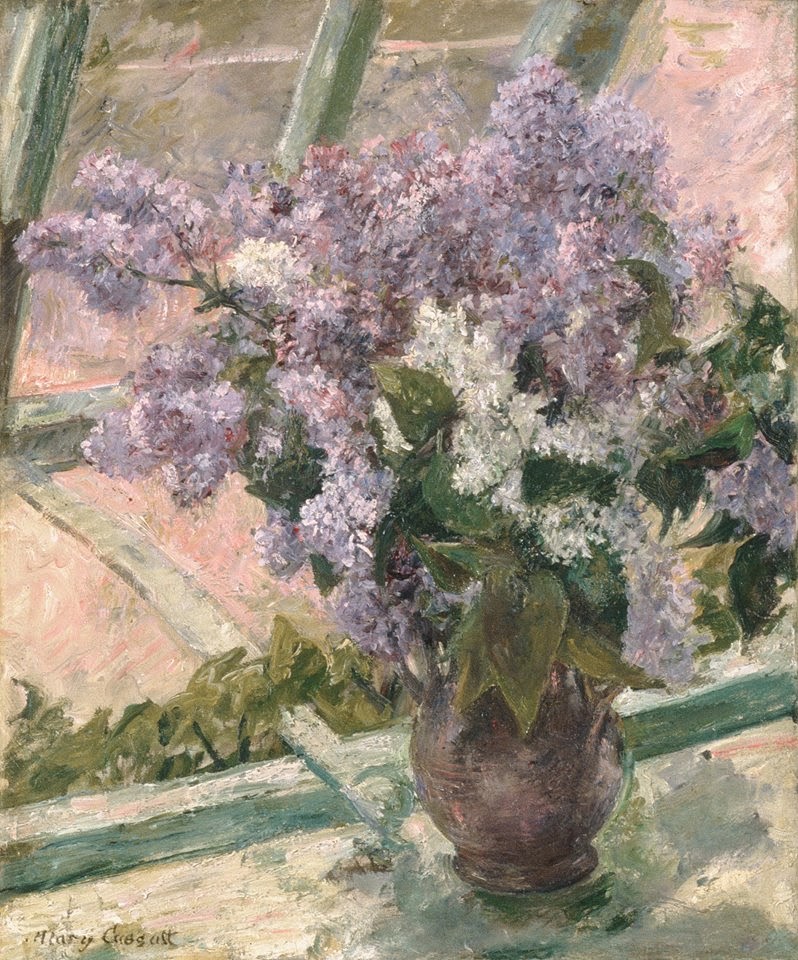
"Lilacs in a Window"
Mary Cassatt, 1879
Up now at the Virginia Museum of Fine Arts in Richmond: "Van Gogh, Manet,and Matisse: The Art of the Flower". I recently saw the exhibit, and was impressed with its breadth. There were masterworks from museums such as the Louvre and the Musee d'Orsay in Paris and the Van Gogh Museum in Amsterdam. It's definitely worth a detour to catch this one. One might ask, "How many pictures of flowers can a person look at in one show??". No problem for me--the subject matter is not so important, because

Tuesday, February 3, 2015

Cypress

"Cypresses"
Vincent van Gogh, 1889
My local newspaper recently ran an article in the Garden section about the cypress tree. I was delighted to see that the article focused on Vincent van Gogh's depictions of the beautiful cypress trees in the south of France. The article noted that the cypress species that van Gogh painted were most likely a fatter, more irregular type than the pencil-thin cypress that we see today. Hmmm.That helps explain

Monday, June 30, 2014

The Collector's Eye

Jean Planque, Collector
Several years ago in Aix-en-Provence, I happened onto an exhibition of paintings collected by Jean Planque. And what a happening! My friend and I had never heard of Jean Planque, and we were both astounded by the breadth and power of his collection. We almost hyperventilated!
"Buste de femme endormie"
Pablo Picasso, 1970
Planque came from a peasant family, hard-working and poor. After many business failures,  he eventually became rich from inventing a concentrated cattle feed. His new wealth enabled him to collect art, yet he remained very discerning about his expenditures. He would ask whether "the paintings he considered buying could feed him all his life, as a field of potatoes can feed a family." I have seldom heard a better way of putting this concept--that man does not live by bread alone, but that art also feeds him.

Dubuffet
"Opera Bobeche", 1963
A well know gallery owner, Ernst Beyler, eventually hired Planque to locate and acquire paintings. The gallery owner realized that Planque had an eye that was unequalled, and that he formed genuine relationships with many great artists of the time. Planque was indeed a sort of "matchmaker" within the art world.


"Tour Eiffel"
Robert Delauney, 1928
Planque was also an aspiring painter himself. As such, he could relate to the struggles and achievements of the artists from whom he collected. He became friends with Picasso, Dubuffet, Braque and other greats of the 20th century. It was said that Planque "merely collected the paintings that he wished he had painted". That thought gave me a frisson of excitement. No wonder his collection was so personal. Planque said that the Van Gogh below might not have been the master's greatest work, but it was beautiful, and it was Planque's chance to own his own Van Gogh!


"Bouquet de fleurs"
Vincent van Gogh, 1886-67

Some of the materials on the exhibition noted that it was Planque's "intuition and capacity for wonder that gave rise to such an unusual, illustrated life story". Yes, just touring the collection was in fact a "life story". For behind each painting there is a history, an anecdote, a friendship with the artist. I especially liked this wall, which showed the paintings of Picasso, Braque and others exactly as they were arranged on the wall of Planque's bedroom in Switzerland:


The good news is that this exhibit is now on view in Aix for fifteen years--so you can see it if your plans take you there. It is a new development, so it is not yet in many guidebooks. Here's the info on where to find it. 


"Deux femmes au bain"
Edgar Degas
If you can't make it in person, here's a UTube video of the 2011 exhibition. Bear with the French, and you can skip ahead to see the show starting about 1.5 minutes in.

I will close with one of Planque's own paintings. It makes me wish that he had abandoned himself to painting his own vision, in addition to collecting...


"Fenetre sur le Luxembourg"
Jean Planque, 1952


[Quotes are from materials printed by Musee Granet in connection with the 2011 exhibition.]


Saturday, May 31, 2014

Van Gogh Writ Large

Photo from Discovery Place Museum
Vincent van Gogh seems to be everywhere I look these days. Here in my own North Carolina hometown, a local museum called Discovery Place has just opened a show called "Van Gogh Alive". The show comes to us from Moscow, and features larger-than-life projections of Van Gogh's paintings. The exhibit promises

Tuesday, February 25, 2014

Chairs

"Red Tray"
16 x 16, oil on linen
I have always loved chairs. The best ones are like pieces of sculpture. And a chair with personality makes a perfect punctuation piece in interior decoration. So it's no wonder that I have been obsessed lately with painting chairs. I started with the painting above, playing with reds. (That's my apron thrown over the back of the chair).


"Teapot and Grapes"
19 x 17, oil on canvas
My primary muse has been a little balloon back chair (above) that I found in a antiques mall.  This style was popular in the mid-1800's. It's curvy, but not too fussy. And believe me, it presents plenty of challenges in the drawing realm.


"Skirted Chair"
16 x 16, oil on canvas
I branched out from the balloon back chair to a Sheraton/Hepplewhite style chair (directly above). Lots of fun negative spaces in the carved back of this one! Along the way, you will notice that I also became enamored of including a napkin draped over the edge of the chair. I love painting the folds of the linen, and besides, it's a great device for drawing one's eye into the painting.

In closing, I will leave you with a few chair paintings by great masters. The first, which is Van Gogh's own chair, was one that he painted many, many times. The second is Gaugin's chair, also painted by Van Gogh, presumably during the time they lived a painted together in the south of France.The last is by the masterful John Singer Sargent.  It goes to show---there is scarcely any motif that has not been fully explored by our predecessors in the art world!

"Chair", Vincent van Gogh
"Paul Gaugin's Chair"
Vincent van Gogh
"Chair"
 John Singer Sargent


Thursday, December 5, 2013

Reproductions: A New High, or a New Low?


A friend recently alerted me to a new phenomenon, something that takes the "art" of reproduction to a new level.  The Van Gogh Museum in Amsterdam is releasing certified reproductions of five Van Gogh masterpieces. Each sells for the amazing price of only $35,000. (Yes, you did count three zeroes).


An 1890 painting by Vincent Van Gogh entitled "Almond Blossoms." Even if you have $100 million or so to spend on a famous painting, the original masterpieces of Vincent Van Gogh are not for sale. But for $35,000 you can purchase a three-dimensional reproduction.
"Almond Blossoms"
(c) Vincent van Gogh

The reproductions are made using technology from Fujifilm called "Reliefography". It is an advanced form of inkjet printing that claims to reproduce the exact surface texture and brush strokes of the original, in a 3D print. Curators claim 95% accuracy. Hmmm.

Is this a nail in the coffin for those of us who create original, hand-made, one-of-a-kind paintings? Will people actually pay five figures for an inkjet print? It seems that modern technology can knock off almost anything a person can create--but can technology itself CREATE? 

As for me, I believe that there is no substitute for human creativity. I agree with the great French painter Eugene Delacroix, that the gift of the artist is to show the world new things about old subjects--things that others have never before appreciated. Delacroix wrote in his wonderful Journal (May 1824): "Nature has stored away for great minds...more new things to say about her Creations...than she has created."  Amen.


Sunday, December 1, 2013

Cypress Trees


"Five Sisters", (c) Lesley Powell 2013
30 x 40, Oil on Canvas
Available
While in the south of France this past summer, I became fascinated with the cypress trees. I was taken by their shapes...tall, narrow, reaching upward. I have heard the shape called "flame-like", and that seems very apt. In the strong winds, the trees bend, lean and sway, acting much like flames flickering on a candle.

Vincent van Gogh wrote to his brother Theo that the cypress trees "have such beautiful lines and proportions, like an Egyptian obelisk." Well, I have a weakness for the classical shapes of the ancient world, such as the obelisk and the urn, so that might help to explain my fascination with the cypress.

"Cypress and Vineyards" (c) Lesley Powell 2013
30 x 24, oil on canvas
Available 
Van Gogh also wrote about the difficulty of getting the dark color of the cypress correct. He called it "one of the most interesting shades of black, and the most difficult to get right, that I can possibly imagine." I heartily concur! I found it hard to make the cypress as dark as it actually is...a dramatic dark in an otherwise very bright, sunny landscape.

I tried to capture the majesty of the cypresses in the two paintings shown above. You can read more about the "Five Sisters" here, or the "Cypress and Vineyards" here.

Tuesday, October 29, 2013

Van Gogh "Repetitions"


"The Postman Joseph Roulin"
Vincent van Gogh, 1889
"The Postman Joseph Roulin"
VIncent van Gogh, 1889
Vincent van Gogh seems to have been a recurring theme in my thoughts over the past few months. Ipreviously posted about several "breaking news" items concerning Van Gogh, including the exhibit at the Phillips Collection in Washington, DC. Here is link to a review of the exhibit from Fine Art Connoisseur, which I wanted to share with you.

The exhibit is focused on Van Gogh's "Repeitions"--scenes that he painted multiple times, each time with subtle variations. I love the idea of studying these repetitions, and I always wonder what makes us revisit the same subject over and over. Is it a desire to explore the subject more deeply? A wish to make a better painting of it than the time before? The realization that the subject is entirely different in a different season, a different light, or different time of day?

I like to paint in series, and yet I often like my very first painting of the series better than the ones that follow. Perhaps it is something about the freshness of the discovery that makes the first painting sing. The excitement of discovery can be an elusive quality for me to recapture in subsequent paintings of the same subject. That's why I like to vary the composition or point of view.

I appreciated what the review said about this. It noted that the degree of spontaneity helped the curators identify which were the first paintings in the series, and which were the repetitions: "The spontaneity found in the [first] painting pointed to its being the first rendition, while the more controlled execution in the Phillip's street scene designates it as the repetition." I hope to visit the exhibition and see for myself.

Wednesday, September 11, 2013

Van Gogh in the News

"Sunset at Montmajour"
Vincent van Gogh, 1888
Reading the newspaper this week, I spotted a subject that makes a timely follow-on to my recent post on the olive grove paintings. It was just announced that a new Van Gogh painting has been discovered--or perhaps "authenticated" is a better word. The painting had been laying in an attic for decades, believed to be a fake. But careful research has revealed it to be the real thing. You can read the full details here.

The news was especially interesting to me because the painting was painted during Van Gogh's time in Arles, in the South of France, where our recent workshop was held. Though it depicts oak trees rather than olive trees, the colors and feel of the painting are very Provencal. 

To make this discovery even more timely, it comes just before a new Van Gogh exhibit is scheduled to open at the Phillips Collection in Washington, D.C. The exhibit opens on October 12, and I for one hope to see it. 

And one more note on Van Gogh. A new, definitive biography was released in December. It is entitled Van Gogh: The Life, and it gets rave reviews. Weighing in at over 800 pages, it promises to keep me reading for many a night.